What is Keratoconus? Causes, Symptoms, and Treatments
What is Keratoconus?
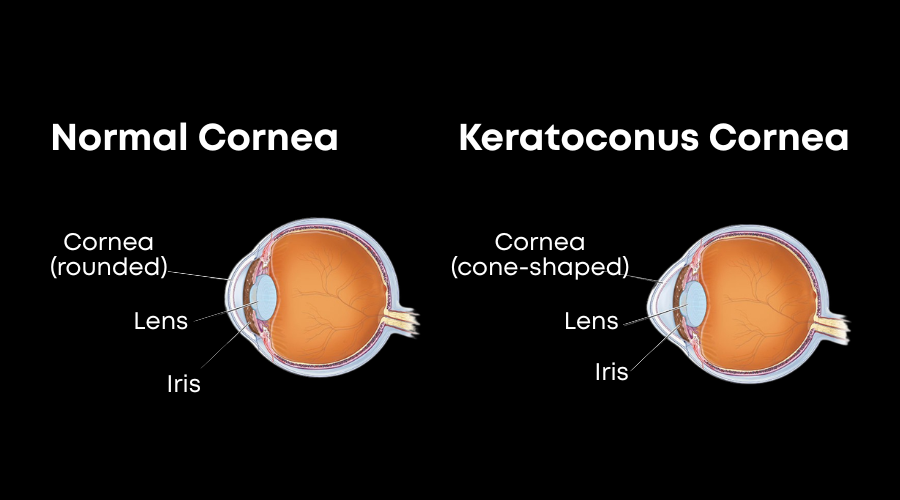
Keratoconus is an eye condition where the cornea thins and takes on a cone shape, causing blurry, distorted, or doubled vision. It typically appears in adolescence and is usually diagnosed in the twenties or thirties. Untreated, it can lead to permanent vision loss.
Causes & Risk Factors
The exact cause is unknown but contributing factors include genetics (1 in 10 patients have a family history), chronic eye rubbing, allergies, asthma, and eczema. It’s also associated with connective tissue disorders like Marfan and Ehlers-Danlos syndromes.
Symptoms
Early symptoms — blurred vision, light sensitivity, and frequent prescription changes — can mimic astigmatism, which often leads to misdiagnosis. As it progresses, patients may experience ghosting, halos around lights, and increased glare, especially at night.
Diagnosis
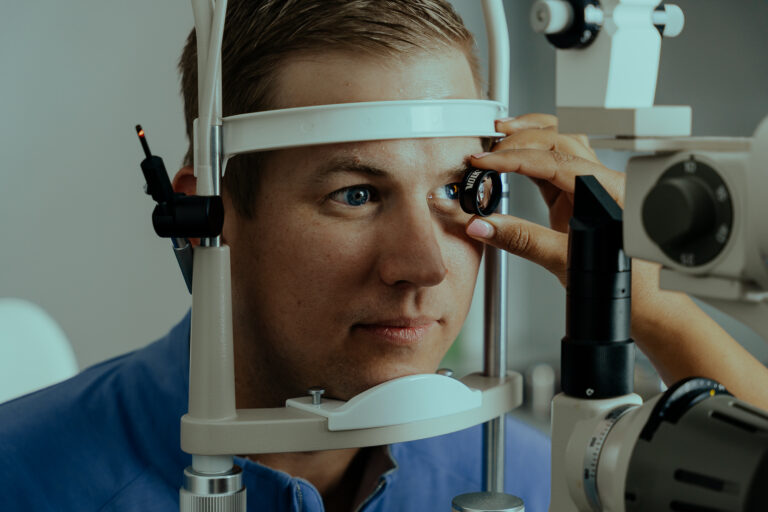
Keratoconus is detected through regular eye exams, corneal topography (mapping the cornea’s surface), and pachymetry (measuring corneal thickness).
Treatment
- Glasses/contacts — Sufficient in early stages; scleral lenses are often used as the condition advances.
- Corneal cross-linking (CXL) — Uses riboflavin and UV light to halt progression. An outpatient procedure that may not be covered by insurance.
- Corneal transplant — Reserved for severe cases. Partial-thickness transplants carry a lower rejection risk than full-thickness ones, though corrective lenses may still be needed afterward.
Early detection leads to the best outcomes — regular eye exams are key.
Are you or a loved one suffering from vision loss?
Fill out the form below and someone will be in touch.