Understanding Presbyopia
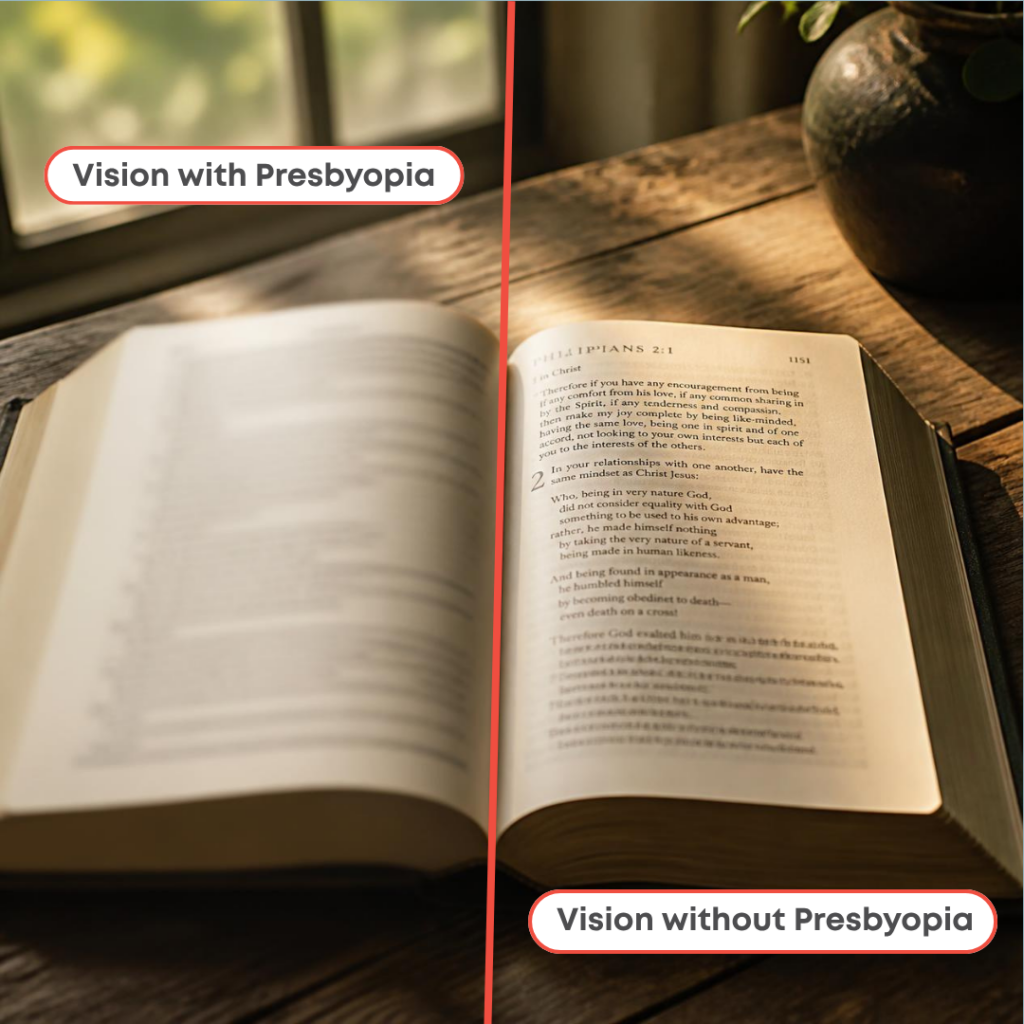
If you’ve recently caught yourself holding a menu, a phone, or a good book farther away just to bring the words into focus, you’re not alone and you’re not imagining it. This is one of the most common vision changes adults experience as they get older, and it has a name: presbyopia
What is Presbyopia?
Presbyopia is a natural, progressive change in near vision that typically shows up between the ages of 40 and 65. Unlike an eye disease, it’s simply part of the aging process. The Greek root of the word literally means “old eye.” It happens because the lense inside the eye, which is soft and flexible when we’re young, gradually becomes more rigid and less able to shift focus for close-up tasks like reading or needlework.
Nearly everyone develops presbyopia eventually, regardless of whether they’ve had great vision their whole life or have dealt with other eye conditions since childhood. Symptoms tend to appear gradually in the early 40s and continue progressing until around age 65, at which point near vision typically levels off.
Common Signs to Watch For
Presbyopia often shows up as:
- Blurry vision when reading or doing close-up work, especially in dim lighting
- Eye strain or fatigue after reading
- Headaches
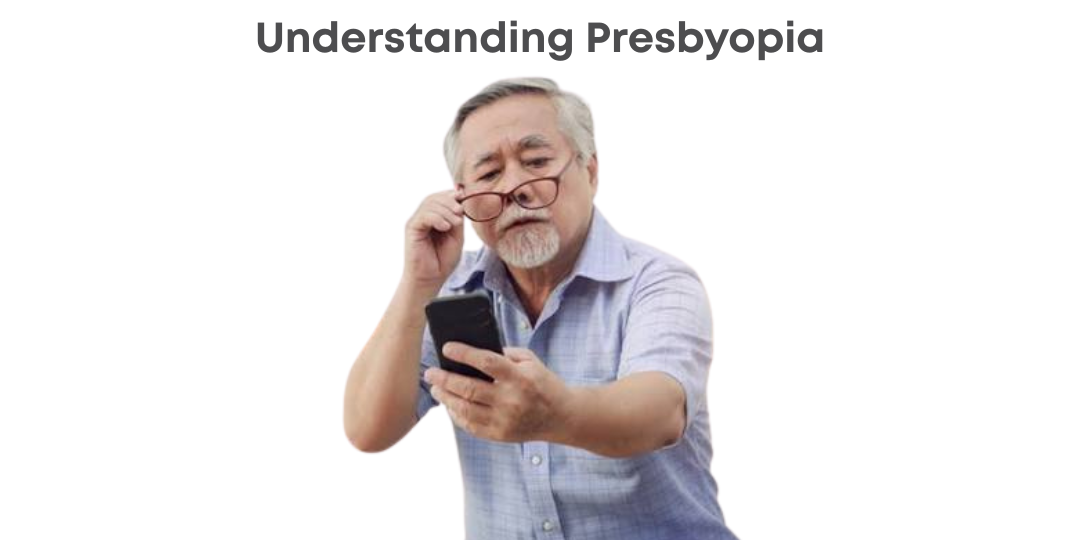
- Needing to hold books, menus, or phones farther away to see clearly
These symptoms tend to be more noticeable when you’re tired or in low light. Any noticeable change in your vision is worth a trip to the eye doctor. A comprehensive exam can rule out other conditions and catch anything else that might be developing.
What Causes It?
To understand presbyopia, it helps to think of the eye like a camera. Light passes through the cornea and pupil before reaching the lens, which flexes to focus that light onto the retina. A young, supple lens can bend easily to bring close objects into focus. As we age, that lens stiffens, making it harder to focus up close.
While aging is the primary driver, a few things can bring on presbyopia earlier than expected:
- Certain medications, including some antihistamines, antidepressants, and antispasmodics
- Health conditions such as diabetes, multiple sclerosis, or cardiovascular disease
- Being farsighted (hyperopia) earlier in life
Presbyopia can’t be prevented or reversed, but a diet rich in eye-healthy nutrients such as, zinc, lutein, zeaxanthin, vitamins C and E, and omega-3 fatty acids, supports overall eye health as you age.
Presbyopia vs. Hyperopia — What’s the Difference?
It’s easy to confuse presbyopia with hyperopia (farsightedness), since both affect near vision. But they’re different conditions with different causes. Hyperopia results from the structure of the eye itself – often a flatter cornea or a shorter eyeball – and many children actually outgrow it. Presbyopia, on the other hand, develops with age and affects virtually everyone eventually.
It’s entirely possible to have both. If you were born farsighted, you’ll still develop presbyopia later in life, and the combination can sometimes affect distance vision as well.
What Are Your Treatment Options?
The good news: presbyopia is very manageable, and there’s no one-size-fits-all answer — the right option depends on your eyes, your lifestyle, and any other vision needs you have.
Reading glasses are the simplest starting point. Over-the-counter readers are convenient and affordable, but a comprehensive eye exam is still worth it — off-the-shelf lenses don’t account for your unique pupil distance, and an exam can catch other developing conditions like glaucoma, cataracts, or macular degeneration. It might even reveal early signs of diabetes or high blood pressure.
Bifocals, trifocals, and progressive lenses are often a good fit for people who already wore corrective lenses. Bifocals split the lens into near and distance sections; trifocals add a middle zone for mid-range vision; progressives blend it all together without visible lines.
Multifocal and monovision contact lenses offer similar correction in contact form — monovision uses one eye for near and one for distance, while multifocal lenses refract light for multiple distances within each lens.
Surgical options are also available for those who want a longer-term solution, including monovision LASIK, refractive lens exchange with an intraocular lens implant, and corneal inlays.
Your eye doctor is the best resource for figuring out which path makes sense for you — especially if presbyopia isn’t your only vision consideration.
See Clearly, Live Fully
Vision changes as we age, but that doesn’t mean quality of life has to change with it. Whether presbyopia is new for you or something you’ve been managing for years, regular eye exams and the right correction can keep you doing the things you love, like reading, cooking, working, and connecting with the people around you.
Are You or a Loved One Suffering from Vision Loss?
Fill out the form below and someone will be in touch.