What is Retinal Detachment? Symptoms and Treatment
A detached retina doesn’t hurt, which is exactly what makes it so dangerous. There is no pain to warn you, only changes in what you see. Knowing those changes, and acting on them fast, can be the difference between saving your sight and losing it.
Here’s what every Oklahoman should know about retinal detachment: what it is, who is most at risk, the warning signs, and why it is always a medical emergency.
What is Retinal Detachment?
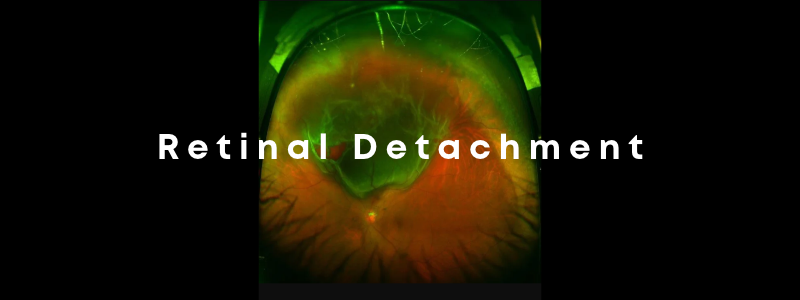
The retina is the thin, light-sensitive tissue lining the back of your eye. Retinal detachment happens when it pulls away from its normal position. Once separated, the retina loses part of its blood and oxygen supply, and your vision is affected.
A detachment can start with a hole or tear in the retina, a fluid leak behind it, or scar tissue tugging on its surface.
Why the Retina Matters
You can’t see without a healthy retina. It captures incoming light and turns it into electrical signals that travel to your brain. It works in three layers:
- Photoreceptors (rods and cones) detect light.
- Interconnecting neurons process the signals the photoreceptors send.
- Ganglion cells bundle together to form the optic nerve, which carries visual information to the brain.
When the retina is damaged, that connection between eye and brain breaks down.
Warning Signs
The retina has no pain-sensing nerves, so you won’t feel a detachment happening. You will see it. Because it’s painless, people often miss or dismiss the early signs. Watch for:
- A sudden shower of floaters, dark specks or cobwebs drifting across your vision.
- Flashes of light, sudden bursts, streaks, or flickers.
- A shadow or curtain over part of your vision, often starting at the side and moving toward the center.
- Blurred or blocked vision that appears suddenly.
If you notice any of these, or any sudden change in your vision, get medical care right away. A detached retina is always a medical emergency.
Why Every Hour Counts
The center of the retina, called the macula, handles your sharp central vision: reading, recognizing faces, driving. If a detachment spreads to the macula and goes untreated, it can quickly cause permanent vision loss. Left untreated, retinal detachment can lead to total blindness in the affected eye.
Who is at Risk?
Because eye injuries can cause it, retinal detachment can happen to anyone. Your risk is higher if you:
- Are older
- Are very nearsighted (high myopia)
- Have a family history of retinal detachment
- Have had eye surgery, such as cataract surgery
- Live with a chronic condition like type 2 diabetes or high blood pressure
- Have had an eye injury
Retinal detachment is relatively rare, but it isn’t just an older adult’s condition anymore. Over the past two decades, cases among younger people have risen significantly, driven largely by sports injuries.
The Three Types of Retinal Detachment
1. Rhegmatogenous Detachment
This is the most common type. Fluid from inside the eye seeps through a tear or hole in the retina, collects behind it, and lifts it away. It’s usually linked to natural aging of the eye, previous eye surgery, or severe nearsightedness. Surgical options include pars plana vitrectomy, scleral buckling, and pneumatic retinopexy, often combined with laser or freezing treatment (cryotherapy) to seal the tear.
2. Tractional Detachment
Scar tissue builds up on the retina’s surface, contracts, and pulls the retina away from the back of the eye. It mostly affects people with advanced diabetic retinopathy, sickle cell retinopathy, or a past eye injury. Microsurgery or laser surgery removes the scar tissue to help restore the retina.
3. Exudative (Serous) Detachment
Here, the retina has no tears or holes. Instead, fluid builds up behind it because of inflammation, leaking blood vessels, or a tumor. It’s seen in people with certain inflammatory conditions, uncontrolled high blood pressure, or eye tumors. Treatment targets the underlying cause rather than the retina itself, using corticosteroids for inflammation, antibiotics or antivirals for infection, blood pressure medication, or radiation and chemotherapy for tumors.
| Type | What Happens | Most Often Linked To | Treatment |
| Rhegmatogenous | Fluid passes through a tear and lifts the retina | Aging, prior eye surgery, severe nearsightedness | Surgery |
| Tractional | Scar tissue pulls the retina away | Diabetic or sickle cell retinopathy, eye injury | Microsurgery or laser |
| Exudative | Fluid builds up behind an intact retina | Inflammation, high blood pressure, tumors | Treating the cause with medication or therapy |
Learn more about retinal detachment and its treatment from the American Academy of Ophthalmology.
How Retinal Detachment is Diagnosed
The best way to catch retinal detachment is a comprehensive, dilated eye exam. Your eye doctor can often spot a problem before you notice any symptoms, and early treatment leads to better outcomes.
During the exam, your doctor dilates your pupils and uses an ophthalmoscope to look at the back of your eye. If blood or cloudiness blocks the view, they may use ultrasound imaging or optical coherence tomography (OCT), which uses light waves to create detailed pictures of the retina.
If you’re over 40, get your eyes checked every one to two years, even without symptoms or a family history of eye disease.
Surgery and Recovery
Most retinal detachment surgeries are outpatient procedures lasting a few hours. More complex cases may take longer or need a short hospital stay. The success rate is high.
Recovery depends on the details of each case and the patient’s overall health. Many people notice improvement within a few weeks, with fuller recovery over six months to a year.
How to Protect your Vision
You can’t prevent every retinal detachment, but you can lower your risk and catch problems early:
- Wear protective eyewear or headgear suited to your sport or activity.
- Manage your overall health, especially blood sugar and blood pressure.
- Get regular eye exams, every one to two years after age 40, or as your doctor recommends.
- Pay attention to changes in your vision, and see your eye doctor right away if something seems different.
Living Well After Vision Loss
When retinal detachment does cause lasting vision changes, life doesn’t stop there. NewView Oklahoma helps Oklahomans who are blind or have low vision build the skills and confidence to stay independent, with clinics in Oklahoma City and Tulsa.