Losing Sight, Finding Skills: Alex’s Story
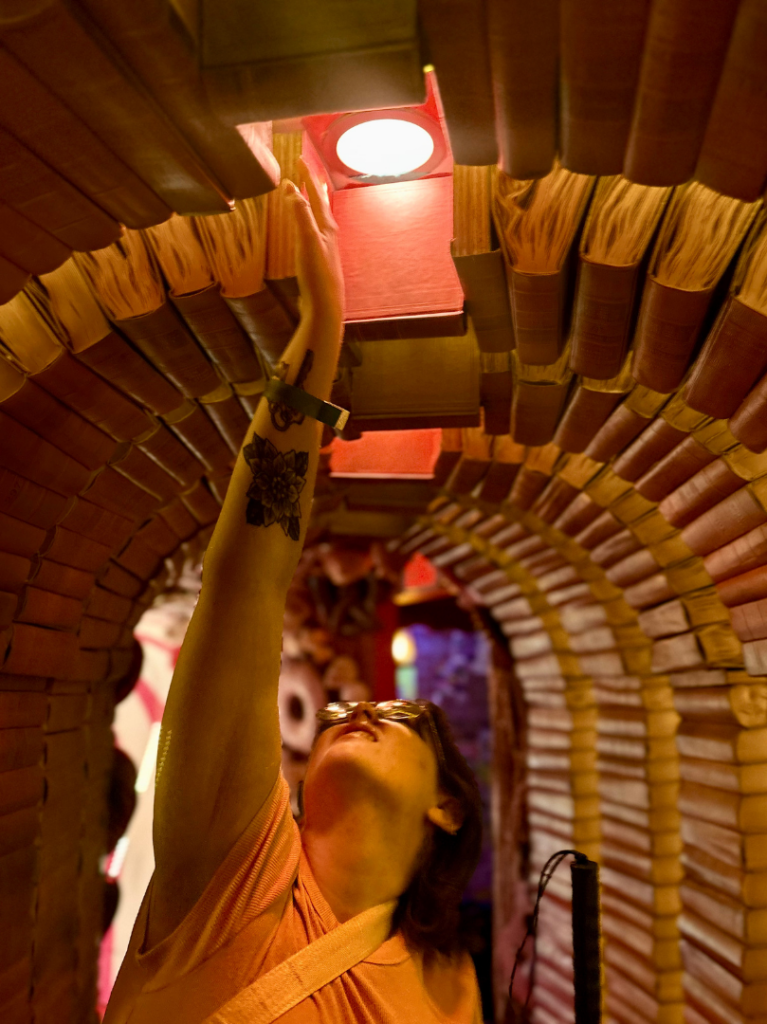
Alex was born with cataracts, which were removed shortly after birth. For the first 11 years of their life, glasses were all they needed to see clearly. That changed with a glaucoma diagnosis at age 11. The pressure building behind their eyes began stealing their vision, and over the next three years, Alex’s optic nerve weakened, and retinal detachments happened in both eyes. Their right eye detached four separate times and never reattached, leaving Alex with only light perception on that side. The left eye reattached successfully on the first try, but the optic nerve damage was already done. Today, that eye gives Alex low vision, not full sight.
Alex doesn’t remember sitting with much fear or sadness through any of it. “I’m a tough kid,” they remember telling themself. “I’m not going to let it affect me.”
Losing Sight Gradually
The surgeries were sudden, but the vision loss over the years was not. Alex describes it as so slow and gradual that they’d only notice it had happened once they realized they could no longer do something they used to be able to do. The clearest example came in band class, where Alex slowly lost the ability to read small print sheet music.
At the time, Alex didn’t know Braille, and the adults around them had never taught a blind student before. “It was really hard to get answers,” Alex said, so they became their own advocate and problem-solver instead. In general education classrooms, that meant speaking up for things like a wider laptop screen and differentiated instruction. In band, it meant getting resourceful: printing sheet music onto poster board, stapling it to old canvases from their art room so it would stand upright, and eventually switching to reading music off an iPad.
“I try stuff until something sticks,” Alex said.
Finding Keys to Work
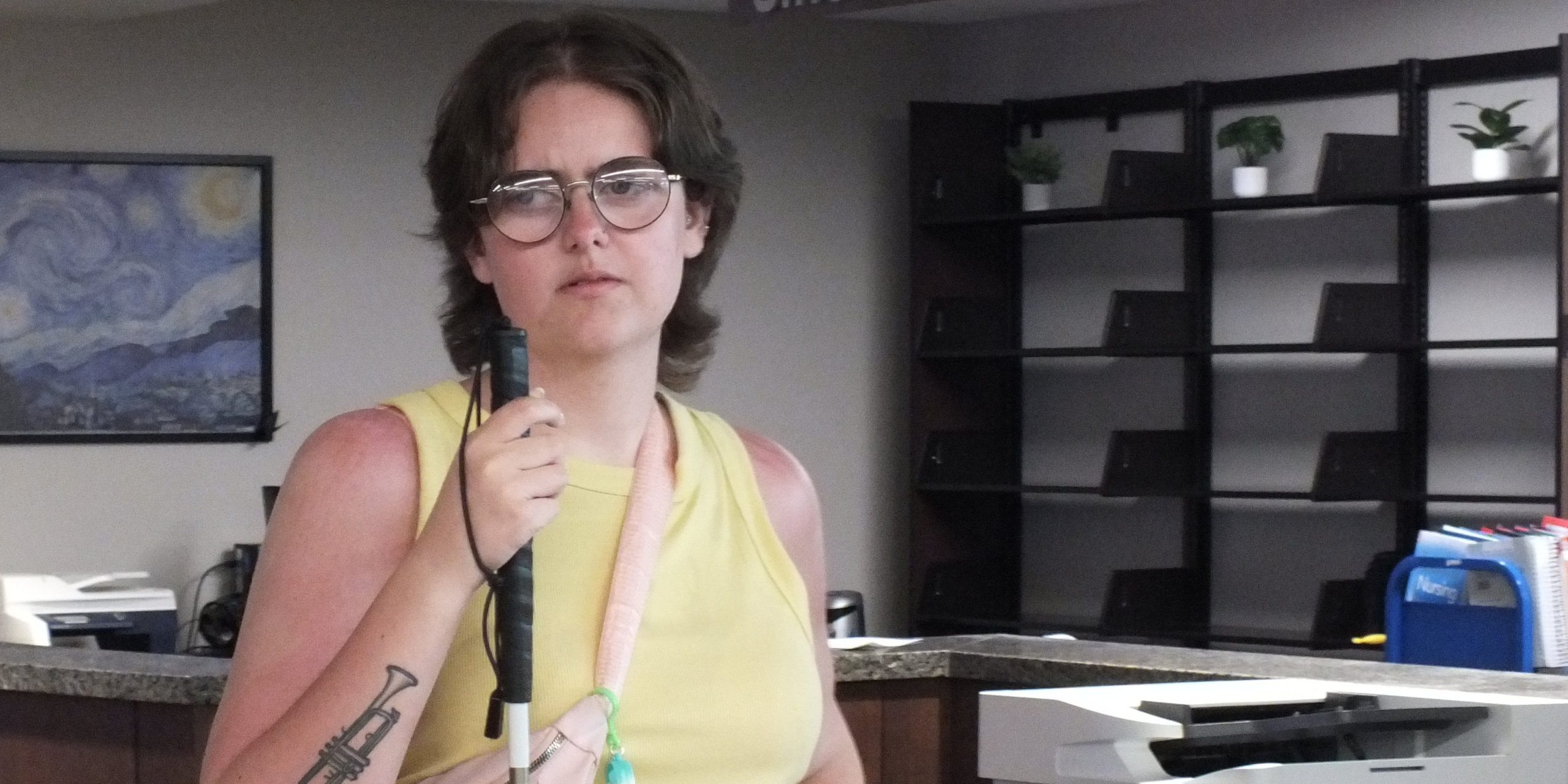
Alex didn’t come to NewView Oklahoma through a doctor’s office or a support group. It was a friend; an Orientation & Mobility intern named Angie. They were hesitant at first, but Angie’s encouragement was enough to get them to apply. Next thing they knew, they were enrolled in Keys to Work and it didn’t take long for that hesitation to disappear. Keys to Work is NewView’s two-week immersive transition program for young adults ages 17 to 22, built around three pillars: real skills, real confidence, and real life. For Alex, all three showed up in unexpected ways.
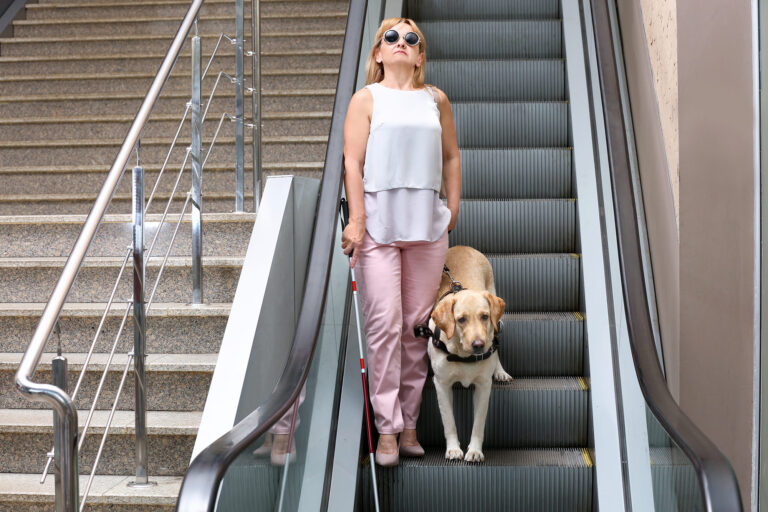
Alex had a cane before ever coming to NewView, but no one had ever actually taught them how to use it. “I was really surprised that I could do so much with the cane,” Alex said, once they started learning proper technique during the program. What had once felt like an obstacle, something that would jab them in the stomach, became a tool they trusted. Enough so that they felt comfortable traveling solo, without a guide and without hesitating at curbs or steps.
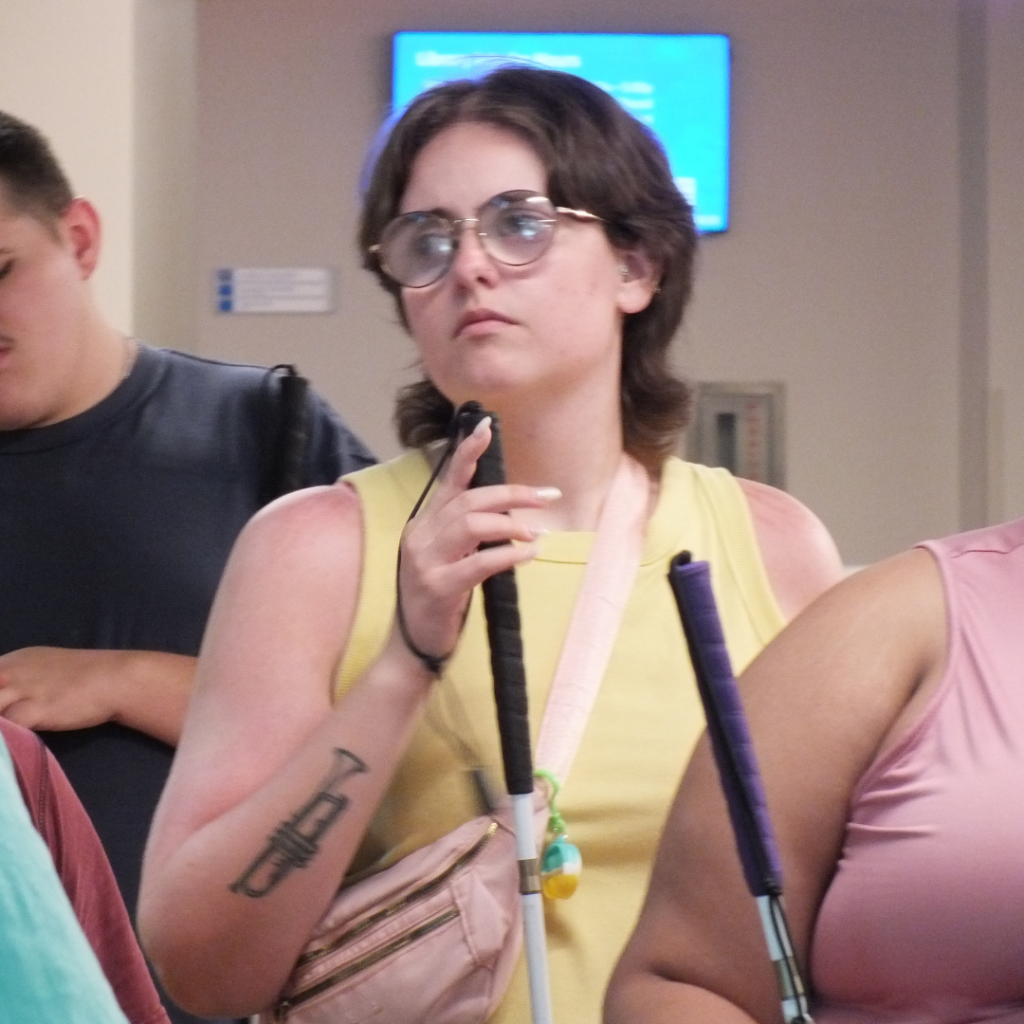
That trust showed during a group outing to the Myriad Gardens, when Alex stepped up to help lead the way. “It felt empowering,” they said. “I never thought I would be able to lead a group of people navigating somewhere.”
A Community Like No Other
For Alex, the skills were only part of the story. Keys to Work introduced them to something they’d never had before: peers who understood exactly what they were going through.
“I’ve never met somebody my age who was visually impaired,” Alex said. “The people I met made everything worth it.”
The friendships didn’t stop there. Alex says some of the group has kept in touch since, checking in with each other about “struggles with our vision” in a way that only makes sense between people who’ve lived it.
And Alex has already found a mentor to look to for what comes next: Hannah, a NewView staff member who is also blind that teaches Braille and music.
Looking Ahead
Alex is now a junior in college working toward a degree in music education, with plans to add an alternative certification in special education. A master’s in conducting is on the radar, though Alex says the real goal is simple: teach beginning band and become a band director. They’ve already started making plans to come back to NewView, hoping to continue Orientation & Mobility training and connecting with more NewView programs.
If you or someone you know is navigating vision loss and doesn’t know where to start, NewView Oklahoma can help. Fill out the form below and someone will reach out to you.